
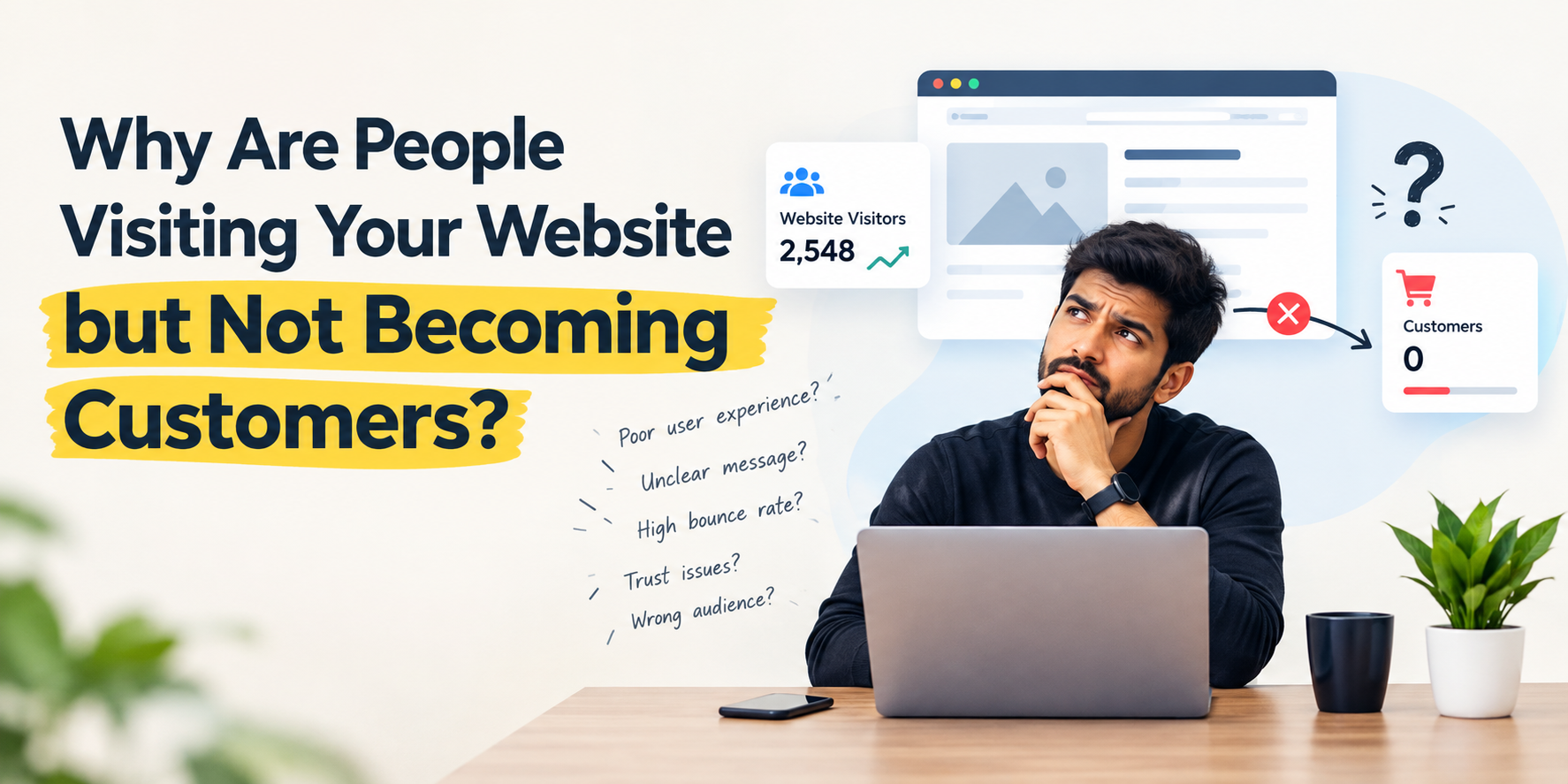
Why Are People Visiting Your Website but Not Becoming Customers?
Bringing visitors to a website is a great start for any business. But getting people to visit your website does not always mean they will buy your products or contact you for services.
Many businesses invest time and money in SEO, social media, and online advertising to attract visitors. However, when those visitors leave without taking action, it becomes difficult to understand what went wrong.
The real challenge is not just attracting people to your website. It is giving them a reason to stay, trust your business, and take the next step.
1. Your Website May Not Answer Their Questions
When people visit a website, they usually look for specific information. They want to know what you offer, how your service can help them, and what makes your business different.
If your website does not provide clear answers, visitors may look for another option.
Keep your content simple, explain your services clearly, and make sure important information is easy to find.
2. First Impressions Can Influence Decisions
Your website is often the first place where potential customers learn about your business. A confusing layout, slow loading speed, or outdated information can affect their experience.
A user-friendly website with clear navigation and mobile-friendly pages makes it easier for visitors to explore your services.
Remember, a website should not only look good. It should also help people find information quickly.
3. Customers Need Reasons to Trust You
People may hesitate to contact a business if they cannot find enough information about it.
You can build confidence by sharing genuine customer feedback, displaying accurate contact details, explaining your services honestly, and publishing useful content.
Trust takes time to develop, but small improvements in your online presence can help customers feel more comfortable choosing your business.
4. Make the Next Step Clear
Imagine visiting a website and liking its services but not knowing how to get started. You might leave without contacting the business.
This is why every important page should guide visitors towards a clear next step.
Simple options such as “Contact Us,” “Request a Quote,” or “Book a Consultation” can make it easier for interested visitors to take action.
5. Your Marketing Message Should Match Your Website
Suppose an advertisement promises affordable website design, but the landing page does not explain the pricing or services. Visitors may feel confused and leave.
Your advertisements, social media posts, and website should communicate a consistent message. When visitors find what they expected, they can better understand your offer.
6. Learn from Visitor Behaviour
Instead of guessing why people leave your website, use website analytics to understand their behaviour.
Tools such as Google Analytics 4 can help you explore traffic sources, page engagement, and important actions taken by visitors.
Reviewing this information regularly can help you identify areas that need improvement and make better digital marketing decisions.
Final Thoughts
A successful digital marketing strategy involves more than bringing people to a website. It also requires understanding their needs and creating an online experience that encourages them to take action.
By improving your website content, building trust, simplifying navigation, and tracking user behaviour, you can create better opportunities to turn visitors into potential customers.
The goal is not simply to attract more visitors. It is to make every visitor’s experience more meaningful.
Written by Keerthi GK
Digital marketing is a continuous journey of learning, creativity, and innovation. As trends and technologies evolve, staying curious and adapting to change will always be essential for growth.
The future of digital marketing belongs to those who keep learning, dare to innovate, and turn every new trend into an opportunity to create meaningful connections.